
International
International Men’s Day 2026: Date, Theme and Ways to Take Part
Holiday date
19 November 2026
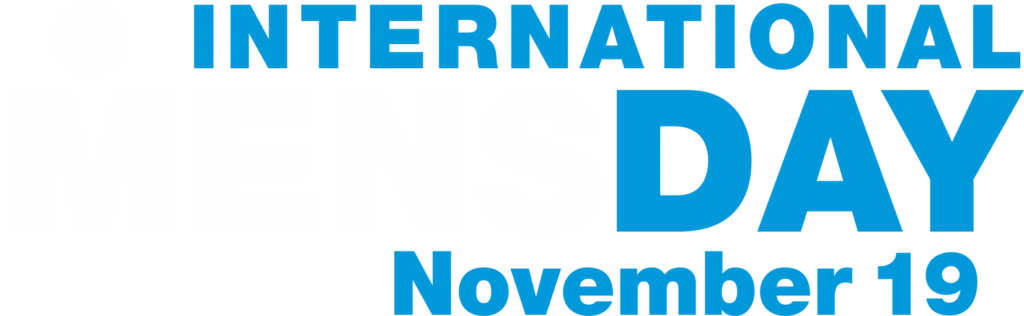
International Men’s Day is Thursday, November 19, 2026. It recognises men’s and boys’ contributions and draws attention to wellbeing, opportunity and relationships. InternationalMensDay.com’s 2026 campaign uses the theme “The Future is Everyone.” National and local organizers may have their own emphasis.
Annual calendar date; organizers may hold activities before or after November 19.
Holiday countdown
9 days left
until International Men’s Day
Calendar days, not a countdown to a particular hour.
Swipe or scroll horizontally to compare all columns.
| Quick fact | What to know |
|---|---|
| Date | November 19, 2026 |
| Day | Thursday |
| Recurrence | November 19 each year |
| 2026 campaign theme | The Future is Everyone — InternationalMensDay.com |
| Focus | Men and boys, their contributions and the challenges they face |
The campaign website publishes its theme and resources. The Australian Men’s Health Forum also confirms the 2026 date and welcomes participation around it.
What does the 2026 theme mean?
“The Future is Everyone” is the message used by InternationalMensDay.com, whose site is supported by the Dads4Kids Fatherhood Foundation. Its 2026 posters place that message alongside the November 19 date and concerns affecting men and boys.
The attribution matters: an international observance can have several organizers without one poster governing every local event. If you share campaign materials, keep the year and publisher visible. The campaign materials explain the message; the six objectives below describe its wider purpose.
For a community discussion, the theme can become a practical question: what would help boys and men take part in a future that also respects everyone else’s opportunities? A school might examine mentoring; a workplace might discuss caring responsibilities; a community group could consider accessible ways to meet regularly. These are suggested applications, not an official universal programme.
How the November observance began
Jerome Teelucksingh founded the present November observance in Trinidad and Tobago in 1999. The campaign’s history connects it with recognising positive examples and contributions in everyday life. History and background.
The idea is broader than thanking celebrities or praising one model of masculinity. A neighbour who helps others, a supportive friend or a patient mentor can provide a more immediate example of contribution than a distant public figure.
The six objectives
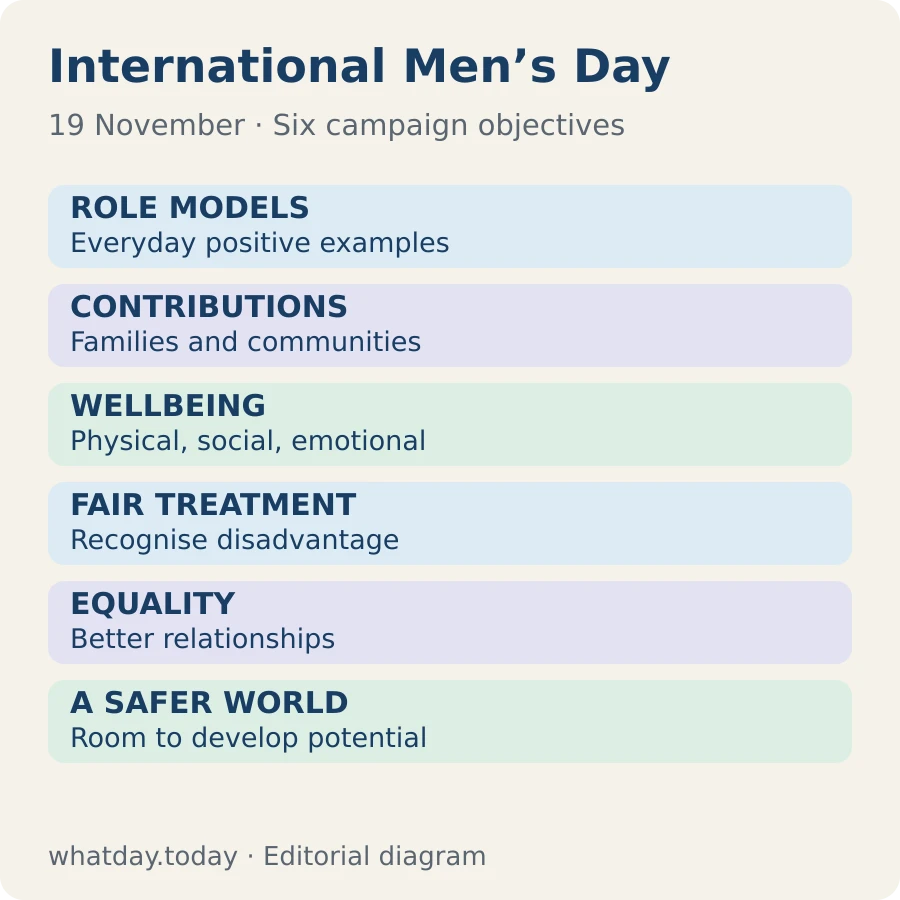
The Australian campaign sets out six objectives. The following is a short paraphrase of that framework, not a new set of rules. Campaign objectives.
Swipe or scroll horizontally to compare all columns.
| Objective | What it draws attention to |
|---|---|
| Positive role models | Everyday examples as well as public figures |
| Contributions | What men bring to families and communities |
| Health and wellbeing | Physical, social and emotional needs |
| Disadvantage and discrimination | Problems that deserve examination rather than assumptions |
| Relationships and equality | Better understanding and fair opportunities |
| A safer world | Conditions in which people can develop their potential |
These objectives explain why the occasion can include appreciation and difficult conversations together. Neither requires treating all men as having the same experience.
Three practical ways to take part
Recognise a specific contribution
Thank someone for something they actually did: teaching a skill, making time to listen or supporting a shared project. A concrete example is more meaningful than a message about what every man ought to be. Ask before making a private story public.
Create a mentoring opportunity
Arrange a small session around a useful skill or question, with a named organizer and a clear next step. For young participants, use an established school or community programme rather than informal arrangements with unknown adults. The aim is an opportunity to learn and connect, not a one-off photo session.
Make support easier to find
A workplace or club can review whether its existing wellbeing and support information is understandable. Show who the service is for and how to contact it. Do not require someone to discuss personal difficulties in front of a group to learn what help is available.
How is this different from Father’s Day?
Father’s Day centres on fathers and father figures. November 19 includes boys and men who are not parents, and its aims extend beyond family relationships. The occasions can overlap in appreciation without being interchangeable.
Is it a replacement for International Women’s Day?
No. Recognising men’s contributions and concerns does not require dismissing those of women. The campaign’s objectives include relationships and equality; an activity can take men’s experiences seriously without becoming a competition over whose difficulties matter.
See the November 19 calendar for other observances on the date.
Sources
Check the original sources for local arrangements and current guidance. External sources open in a new tab.
Plan around this date
See the day’s calendar · Browse this month · International Men’s Day countdown
More to explore

New Year’s Day Beyond Midnight
New Year’s Day is January 1, but celebrations extend beyond the countdown. Selected Spanish, Scottish and Japanese customs carry the occasion from evening gatherings to sunrise and the first days of the year.
Mexico Revolution Day 2026: November 16 Holiday and November 20 Anniversary
Mexico Revolution Day’s 2026 rest day is November 16; the anniversary is November 20. Compare the dates and plan around local opening schedules.
Diwali 2026
When is Diwali in 2026? Check the November 8 date, understand Deepavali and local holiday differences, and learn how to join a celebration respectfully.
Image descriptions and credits are provided in the articles. AI illustrations are labelled.