
Japan
Shichi-Go-San 2026: Ages, Kimono and Shrine Visits on November 15
Holiday date
15 November 2026; family visits may take place nearby
Shichi-Go-San falls on Sunday, November 15, 2026. This Japanese celebration marks children’s growth at ages three, five and seven. Families visit shrines to give thanks and express hopes for their children’s future; nearby dates are also used. It is not a national public holiday.
The counter marks the traditional date, not a booked shrine appointment.
Holiday countdown
5 days left
until Shichi-Go-San
Calendar days, not a countdown to a particular hour.
Swipe or scroll horizontally to compare all columns.
| Quick question | Answer |
|---|---|
| What does the name mean? | Seven, five, three |
| What is the calendar date? | November 15 each year |
| What will visitors see? | Families visiting shrines, formal clothing and commemorative photographs |
| What is the traditional sweet? | Chitose-ame, a long candy associated with longevity |
Kids Web Japan introduces the occasion and its place in the Japanese calendar.
Which children celebrate?
The customary pattern includes girls at three and seven, and boys at five; boys also celebrate at three in some regional and family traditions. Meiji Jingu’s own guidance recognises that variation rather than presenting every age group as compulsory everywhere. Meiji Jingu: shrine prayer questions.
Swipe or scroll horizontally to compare all columns.
| Age | Historical milestone | Meaning of the custom |
|---|---|---|
| Three | Hair-growing ceremony | Children’s hair was allowed to grow |
| Five | Boys wearing hakama | A milestone associated with formal clothing |
| Seven | Girls using an obi | A sash replaced the simpler cords fastening a child’s kimono |
These older milestones help explain the modern celebration. Today, a family need not recreate every historical practice to mark a child’s growth. Japan Creative Centre’s cultural guide.
Actual age or traditional counted age?
Both conventions appear. In traditional kazoedoshi, a child is counted as one at birth and gains another year at New Year. In modern completed-age counting, age advances on the birthday. That is why two guides can give different eligible birth years without necessarily describing different festivals.
Meiji Jingu explains that completed-age counting has become more common. It also allows flexibility for families celebrating siblings together. When making arrangements, provide the child’s birth date and ask which convention the shrine or family is using. Meiji Jingu’s explanation of age counting.
For example, under kazoedoshi a child born late in December becomes two on the following January 1, even though only a few days have passed. A birthday-based calculation would still give age zero. The choice of counting system should therefore come before selecting a package advertised simply for a “three-year-old.”
What do children wear?
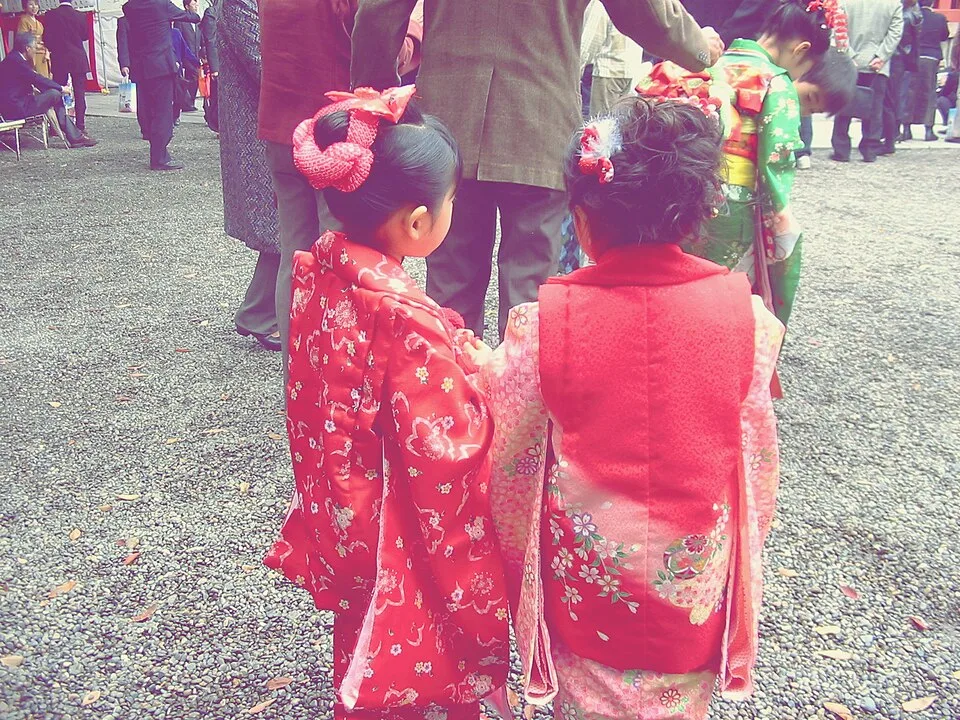
Traditional dress makes the occasion visually distinctive. Five-year-old boys may wear hakama trousers with a haori jacket. Three-year-old girls may wear a padded hifu vest over their kimono, while seven-year-old girls wear an obi sash. Families also choose Western-style formalwear. Clothing explained by Japan Creative Centre.
The garments and accessories help explain what you see in family photographs, but clothing alone does not establish a child’s exact age. Rentals and studio portraits are practical options, not the definition of the observance. A photograph appointment should not be assumed to include a shrine prayer.
Why do children receive chitose-ame?
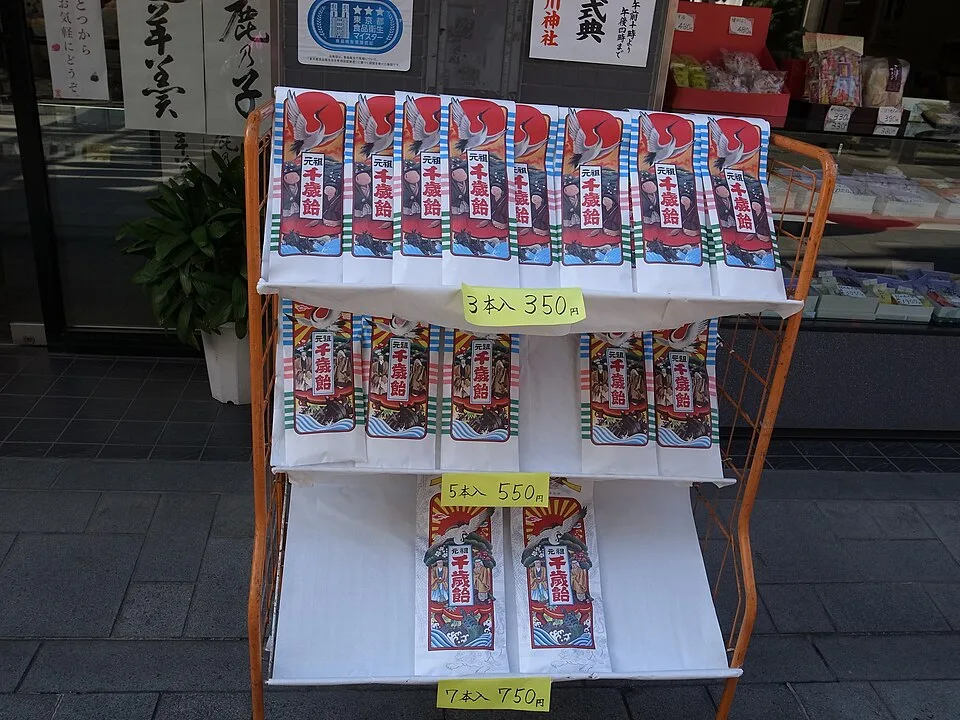
The name evokes “a thousand years.” The long candy and its decorated packaging express wishes for a long life. Cranes and turtles on the bags are longevity symbols, so the packaging carries meaning beyond protecting the sweet. Candy and its symbolism.
Pointing out those details gives a child something concrete to recognise: the long shape, the animals on the bag and the family’s wishes. Prices visible in historical photographs are not current prices for a visit in 2026.
Planning a shrine visit
November 15 is the shared calendar date, but families also visit on surrounding weekends. Check the shrine’s current arrangements before coordinating clothing, photographs and travel. Leave space between appointments so that a child can rest or change clothes.
A short family checklist is enough:
- Confirm whether you are booking a prayer, photographs or both.
- Check the age-counting convention and clothing arrangements.
- Allow time for walking, waiting and a break.
- Follow the shrine’s photography rules and ask before photographing other families.
Is this a birthday celebration?
It recognises a stage of childhood rather than the exact day of birth. A family can celebrate a birthday separately while joining this shared November tradition.
Find the date in the November 15 calendar.
Sources
Check the original sources for local arrangements and current guidance. External sources open in a new tab.
Plan around this date
See the day’s calendar · Browse this month · Shichi-Go-San countdown
More to explore

New Year’s Day Beyond Midnight
New Year’s Day is January 1, but celebrations extend beyond the countdown. Selected Spanish, Scottish and Japanese customs carry the occasion from evening gatherings to sunrise and the first days of the year.
Mexico Revolution Day 2026: November 16 Holiday and November 20 Anniversary
Mexico Revolution Day’s 2026 rest day is November 16; the anniversary is November 20. Compare the dates and plan around local opening schedules.
Diwali 2026
When is Diwali in 2026? Check the November 8 date, understand Deepavali and local holiday differences, and learn how to join a celebration respectfully.
Image descriptions and credits are provided in the articles. AI illustrations are labelled.