
International communities
Transgender Day of Remembrance 2026: November 20 and Respectful Participation
Holiday date
20 November 2026
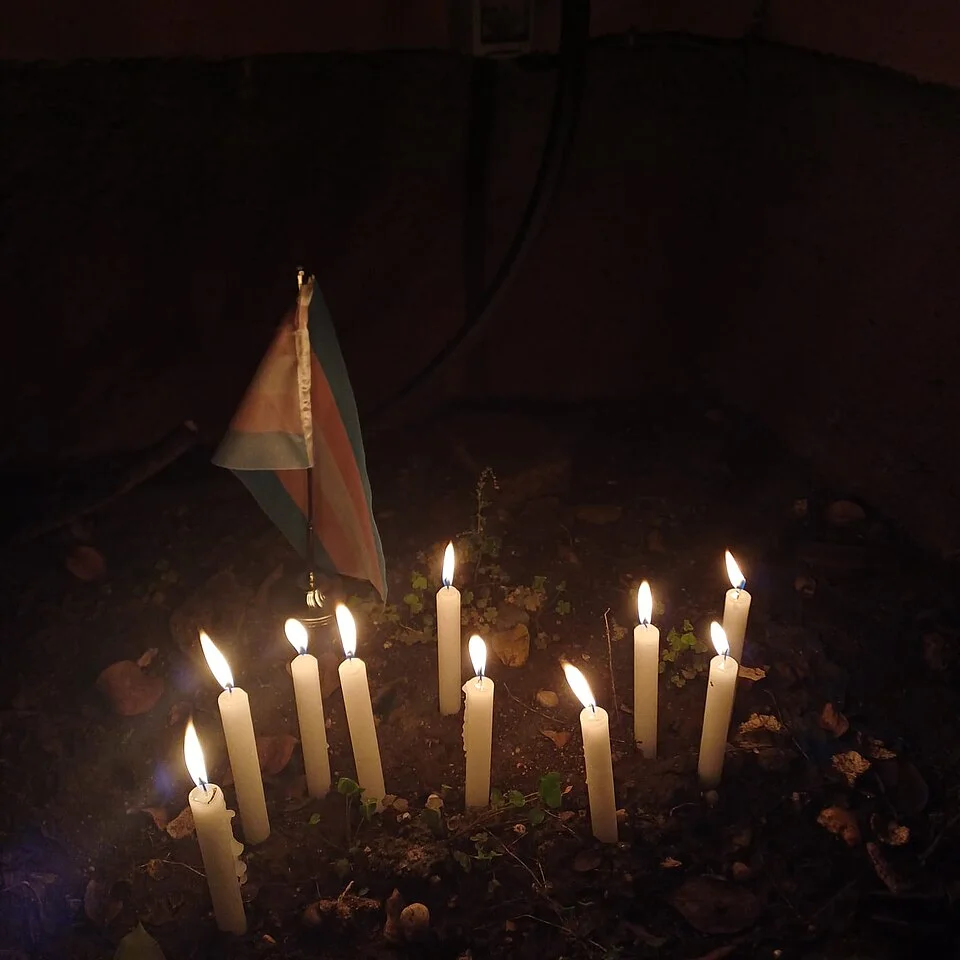
Transgender Day of Remembrance is Friday, November 20, 2026. Often shortened to TDOR, it honours transgender people whose lives were lost to anti-transgender violence. It is a day of remembrance, distinct from Transgender Day of Visibility on March 31. Local vigils have their own schedules.
Calendar-day reference only; local programmes have their own times.
Holiday countdown
10 days left
until Transgender Day of Remembrance
Calendar days, not a countdown to a particular hour.
Swipe or scroll horizontally to compare all columns.
| Quick fact | Detail |
|---|---|
| Date | November 20, 2026 |
| Recurrence | November 20 each year |
| Character | Community remembrance and mourning |
| Common forms | Vigils, readings and memorial gatherings |
| Local timing | Confirm directly with the organiser |
How the observance began
The Trans Remembrance Project traces its beginning to 1999, when transgender advocate Gwendolyn Ann Smith organised a vigil in memory of Rita Hester, a transgender woman killed in 1998. The vigil also remembered other transgender people lost to violence, establishing a tradition that spread beyond its original setting.
The purpose remains personal as well as public. People being remembered were members of families, friendships and communities. A respectful account should not turn their deaths into spectacle or reduce their lives to a statistic.
November 20 gives communities a shared date, but there is no single worldwide ceremony that everyone must follow. A local gathering may include silence, spoken names, testimony or music according to the wishes of its organisers and participants.
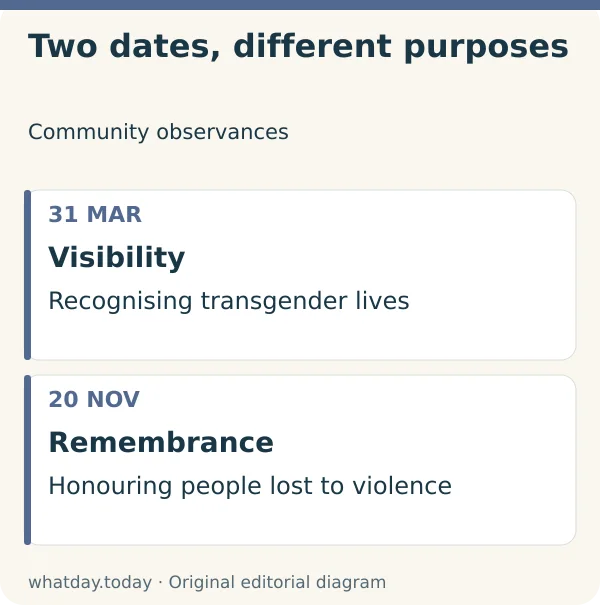
Remembrance and visibility have different purposes
The names are sometimes confused because both concern transgender people. Their emphasis is different. GLAAD’s community calendar lists them separately.
Swipe or scroll horizontally to compare all columns.
| Occasion | Annual date | Main emphasis |
|---|---|---|
| Transgender Day of Visibility | March 31 | Recognition of transgender lives and visibility |
| Transgender Day of Remembrance | November 20 | Honouring people lost to anti-transgender violence |
For a school newsletter or workplace calendar, that distinction affects the language and imagery you choose. A celebratory greeting prepared for a visibility event does not automatically fit a memorial. Use the actual name of the occasion and explain its purpose in one direct sentence.
A suitable introduction might be: “Today we remember transgender people lost to violence and listen to the communities honouring their lives.” This is an editorial example, not a quotation from an organiser or an official annual slogan.
Before attending a vigil
Find the announcement from the group holding the event, rather than relying only on a repost. Check whether it is public, whether registration is needed and whether the organiser has published guidance about photographs, accessibility or online participation.
A small gathering may be intended for a particular community. An event being mentioned publicly does not necessarily mean every part of it is open to filming or live streaming. If you are attending as a guest, allow the organisers to set the tone and structure.
Useful questions to check in advance include:
- Is the time listed in my local time zone, especially for an online ceremony?
- Is there a quiet space or an option to step away?
- Does the venue allow candles, or are electric lights being used?
- Are photographs permitted, and how will consent be obtained?
These are practical planning prompts. They do not describe a verified 2026 programme at a particular venue.
Handling names and memorial material carefully
If you are preparing a reading or display, use information supplied by a credible memorial project or the event organiser. Follow the person’s name and pronouns as documented by the people responsible for the tribute. Do not add private details, graphic descriptions or unverified social-media claims to make a story more dramatic.
Give photographs captions that say where and when they were made. A picture from an earlier vigil can illustrate the practice of remembrance, but should never be presented as an image of this year’s gathering.
If you use a memorial report, record its geographical coverage and reporting period alongside any figures. A local vigil’s list and an international monitoring report may cover different people and periods. Neither should be presented as a complete worldwide record without checking its methodology.
Taking part without attending an event
A person may prefer private reflection, reading a community-published tribute or offering practical help requested by a local organisation. There is no requirement to share grief publicly or disclose personal experiences to demonstrate support.
For a group, keep participation voluntary. Explain the subject before a memorial reading and allow people to leave or listen quietly. If you plan to share a recording afterwards, arrange consent beforehand rather than treating attendance as permission.
See the November calendar for the date in context. A calendar reminder can help you remember the occasion; the people and communities being honoured should remain the centre of the day.
Sources
Check the original sources for local arrangements and current guidance. External sources open in a new tab.
Plan around this date
See the day’s calendar · Browse this month · Transgender Day of Remembrance countdown
More to explore

New Year’s Day Beyond Midnight
New Year’s Day is January 1, but celebrations extend beyond the countdown. Selected Spanish, Scottish and Japanese customs carry the occasion from evening gatherings to sunrise and the first days of the year.
Mexico Revolution Day 2026: November 16 Holiday and November 20 Anniversary
Mexico Revolution Day’s 2026 rest day is November 16; the anniversary is November 20. Compare the dates and plan around local opening schedules.
Day of Dignity and Freedom 2026: Why Ukraine Remembers November 21
Ukraine marks the Day of Dignity and Freedom on November 21, 2026. Explore the two revolutions, a clear timeline and the meaning of the commemoration.
Image descriptions and credits are provided in the articles. AI illustrations are labelled.